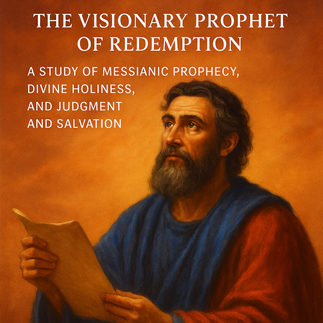
ISAIAH — The Visionary Prophet of Redemption
Personal Life (Birth to Death):
Isaiah, son of Amoz, ministered in Jerusalem around the 8th century B.C., during the reigns of four kings — Uzziah, Jotham, Ahaz, and Hezekiah. His name means “The Lord is Salvation.” Tradition holds that he came from royal or noble lineage, which gave him access to the courts of Judah’s kings. His ministry spanned more than sixty years — a lifetime of declaring God’s holiness to a corrupt nation. Isaiah was married to a prophetess and had at least two sons, whose names carried prophetic meaning. According to Jewish tradition, Isaiah was eventually martyred — sawn in half under King Manasseh’s reign, sealing his testimony with blood. His life reveals that true prophetic vision costs more than insight; it costs intimacy and endurance.
Calling and Audience:
Isaiah’s call came in a vision of God’s throne (Isaiah 6). The heavens opened, and he saw the Lord high and lifted up, His train filling the temple. In that moment of awe, Isaiah was undone by his own unclean lips until a seraph touched his mouth with a coal from the altar. Then came the divine commission: “Whom shall I send, and who will go for us?” and Isaiah replied, “Here am I; send me.” His message was to Judah and Jerusalem — the people of covenant who had forgotten their covenant God. His audience included kings, priests, and people alike. Isaiah’s words were both poetic and piercing, combining heavenly imagery with earthly warning.
Trials and Challenges:
Isaiah faced ridicule, unbelief, and political pressure. He was often accused of speaking doom instead of hope. Judah’s kings preferred flattery to prophecy, and Isaiah’s steadfast truth made him a threat to their comfort. His vision of judgment — including the captivity of Judah — was rejected by many until it came to pass. He also lived during the looming threat of Assyrian invasion, carrying the burden of national intercession while watching his people turn repeatedly to idols and foreign alliances instead of God.
If He Lived in Jesus’ Day:
If Isaiah had walked the earth during Jesus’ ministry, he would have recognized Him instantly. In truth, he already did — for Isaiah saw Him centuries before. His writings contain the clearest Messianic prophecies in Scripture: the virgin birth, the suffering servant, and the reign of the Prince of Peace. In Jesus’ day, Isaiah would have stood beside Christ as a prophetic witness, declaring, “This is the fulfillment of what was written.” His ministry mirrors that of John the Beloved — one who saw the glory of Christ before the cross revealed it.
Strange or Distinct Ways He Lived:
Isaiah lived out prophetic signs as living parables. At one point, God commanded him to walk naked and barefoot for three years as a sign against Egypt and Cush, symbolizing their coming shame under Assyrian conquest (Isaiah 20). His obedience in such humbling acts revealed the prophet’s willingness to bear ridicule for revelation. His life illustrated that prophetic vessels are not performers but instruments — even when the message costs them their dignity.
Lessons from His Life:
Isaiah teaches that vision without purity leads to error. His encounter in the temple proves that before God sends a prophet to a nation, He sanctifies the prophet’s mouth and motives. Isaiah’s ministry also demonstrates that prophecy is not only about warning — it is about redemption. His messages flow from rebuke to restoration, from woe to worship. He reminds us that prophetic ministry must always end in hope, not despair, because God’s wrath is a doorway to mercy.
Economic Status — Rich or Poor:
Isaiah likely lived in moderate to high social standing due to his access to the royal court and his noble lineage. Yet his wealth was not in possessions but in revelation. He exchanged palace favor for divine assignment. His ability to speak before kings but remain submitted before God shows that the prophet’s prosperity is measured in influence, not affluence.
Why a Prophet’s Calling Is Different from the Other Fivefold Offices:
Isaiah embodies the prophet as seer and statesman. His role combined revelation and reform. Unlike the apostle who builds structures, or the pastor who nurtures souls, Isaiah shaped nations through divine policy. His words became Scripture, proving that the prophetic office extends beyond the moment — it legislates the ages. Prophets carry heaven’s constitution and declare it into history.
Destiny, Legacy, and Eternal Assignment in the Earth:
Isaiah’s destiny was to reveal the holiness of God and the coming salvation through the Messiah. His legacy is eternal — his prophecies form the backbone of New Testament revelation. More than any other prophet, Isaiah’s writings are quoted by Jesus and the apostles. His eternal assignment continues as the voice of vision — showing us that no matter how dark the season, God is still painting redemption across time.
Occupation / Natural Vocation:
Though Scripture gives little detail, Isaiah’s familiarity with court life and diplomacy suggests he may have served as a scribe, advisor, or royal historian before his call. His refined literary style reflects education and intellect shaped by exposure to leadership and culture. God often uses prophets who can bridge both heaven and earth — those fluent in revelation and relevance.
Personal Observation & Practical Application (Prophetic Insight for Today):
Isaiah’s life teaches that true prophetic vision demands consecrated sight. Before one can see the future, one must first see God. Prophets today must return to the altar of purification before they stand on platforms of proclamation. Isaiah’s boldness challenges the modern prophetic movement to merge beauty with truth — to declare not just judgment, but Jesus. His cry of “Here am I; send me” still echoes, calling every prophet to yield not their gift, but their life.